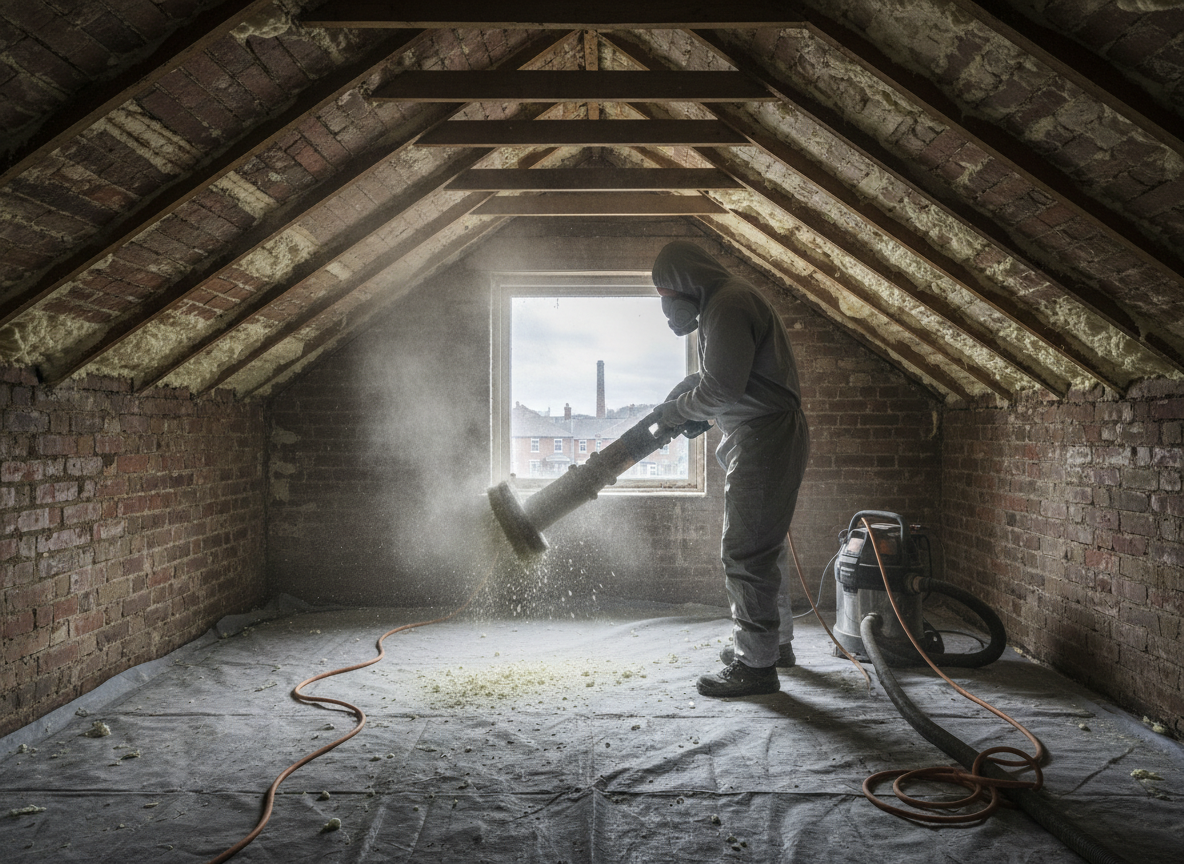
Closed cell spray foam bonds tightly to timber joists and masonry in Hull's pre-war terraced houses, often found along roads like Boothferry Road. Removal requires cutting the material into sections without damaging original lath and plaster or exposing residents to dust. The dense structure traps moisture against walls, so crews must check for rot in floor voids and roof spaces before extraction begins. Wet Hull winters make this worse because rain drives through gaps in older roofs and accelerates decay once the foam is disturbed.
In the Hull area many properties have solid brick walls and limited loft access, which changes how removal crews work. Closed cell foam expands into every crevice around chimney breasts and party walls, so technicians use specialist saws and vacuums to avoid spreading debris into neighbouring homes. UK building regulations require proper ventilation after removal, and any remaining foam must be fully cleared to prevent future condensation in the HU4 postcode's damp climate.
Edge cases appear in converted attics where foam was applied over electrical cables or pipework. NexaClean Crew isolates power and water before starting, then inspects for hidden junctions that could be damaged during cutting. After extraction the team ventilates the space and leaves surfaces ready for new insulation or inspection, reducing the risk of callbacks in properties that see frequent rain and high humidity.
Technician insight
In Hull, the thing that catches most people out with closed cell spray foam removal is how the material has wicked moisture into the original brickwork along Boothferry Road terraces. Once disturbed the walls stay damp far longer than expected because of the area's frequent rain and poor airflow in solid-wall houses, so extra drying time is always needed before anything else goes back in.
Attic foam extraction in HU4 terrace
Closed cell foam had been sprayed across rafters in a 1930s terraced house near 317 Boothferry Road, trapping condensation against the ridge. Inspection showed early rot in two joists. The crew cut the foam free in sections, cleared every trace from the brickwork and left the loft ventilated. The owner later reported no further damp patches through the following winter.
How it works
- 1
Site Assessment
Inspect loft, walls and floor voids in the Hull property to map foam locations and check for rot or wiring issues.
- 2
Containment Setup
Seal work areas with sheeting to stop dust migrating into living spaces or adjacent terraced homes.
- 3
Sectioned Removal
Cut foam into manageable pieces using handheld tools and extract without disturbing original structure.
- 4
Cleanup and Ventilation
Vacuum residues, clear debris and open vents so the space can dry before further work.
Pricing
Cost depends on access difficulty, depth of foam and property size; NexaClean Crew provides upfront quotes after viewing the job.