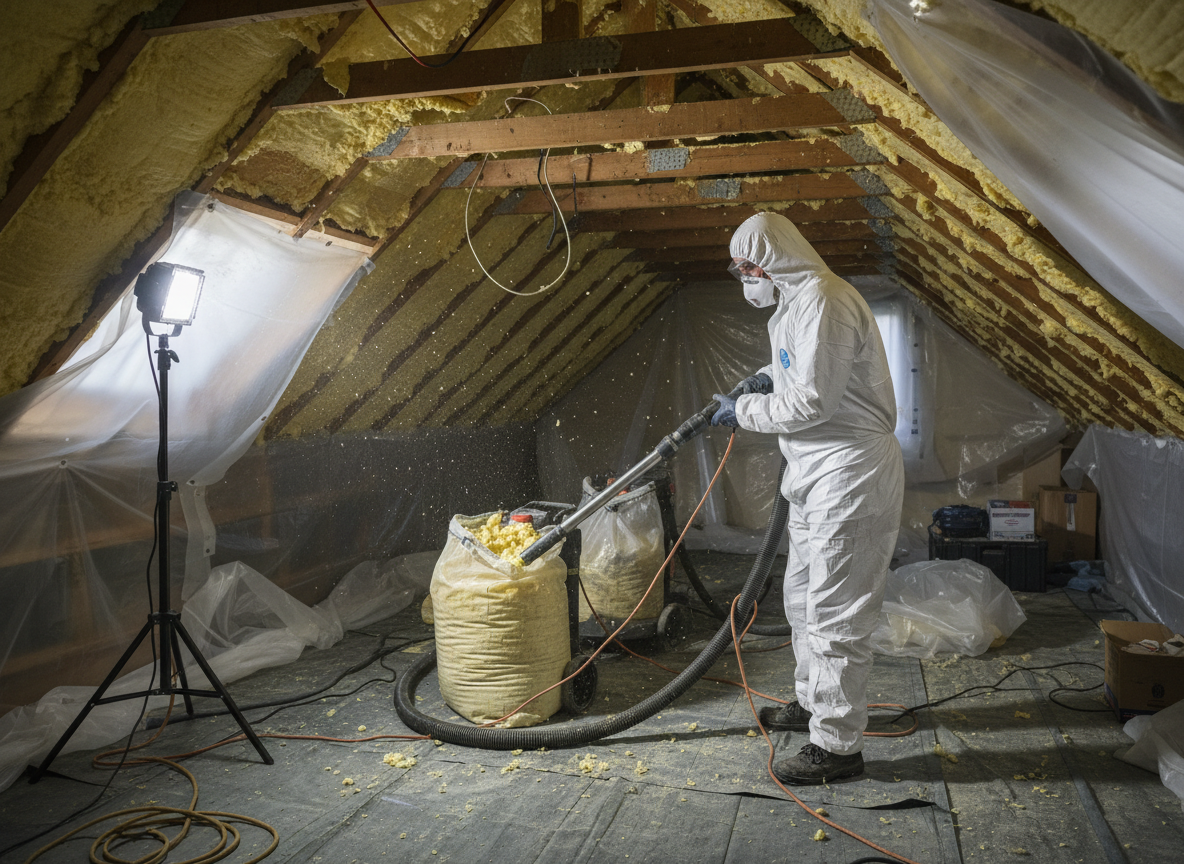
Hull's older terraced housing stock along routes like Boothferry Road often features closed cavities where spray foam was injected decades ago. Removal requires cutting access points without damaging original brickwork or lathe and plaster, then extracting material that has bonded to joists and wiring. Damp from the Humber estuary accelerates foam degradation, releasing particles into living spaces when disturbed.
Night calls in Hull frequently involve properties where foam has expanded into roof voids above kitchens or bathrooms, creating fire risks around electrical runs. Technicians must isolate power, use negative air machines to contain dust, and bag waste for proper landfill disposal rather than burning. Winter work adds challenges as cold makes foam brittle and harder to section cleanly.
Access Challenges in Hull Housing
Hull's narrow ginnels and shared boundaries limit equipment placement, forcing manual extraction in many cases. Soil conditions near the river mean ground-floor cavities can hold moisture that softens foam over time, requiring extra drying steps before sealing openings.
Technician insight
In Hull, the thing that catches most people out with 24/7 Spray Foam Removal is how quickly foam bonds to the back of plaster in pre-1900 terraces near the docks; once winter damp reaches it the material turns to sticky crumbs that travel through every floorboard gap and require far more containment than jobs in newer estates.
Night Call on a Hull Terrace
Foam in a Boothferry Road end terrace had expanded into the kitchen ceiling void and started shedding particles. Inspection showed it had wrapped around old electrical cables. We isolated power, set up full containment, sectioned and removed the material, then cleared the dust before restoring power.
How it works
- 1
Initial Assessment
Inspect the property at 317 Boothferry Road base or on-site in Hull to map foam locations and note any wiring or pipe interference.
- 2
Containment Setup
Seal work zones with plastic sheeting and run extraction units to prevent particles spreading through the home.
- 3
Material Extraction
Cut strategic access holes, section the foam, and remove it piece by piece while protecting surrounding surfaces.
- 4
Site Restoration
Clean cavities, dispose of waste, and leave openings ready for owner repair or insulation replacement.
Pricing
Upfront quotes follow inspection; final cost depends on foam depth, property access, and time of call.