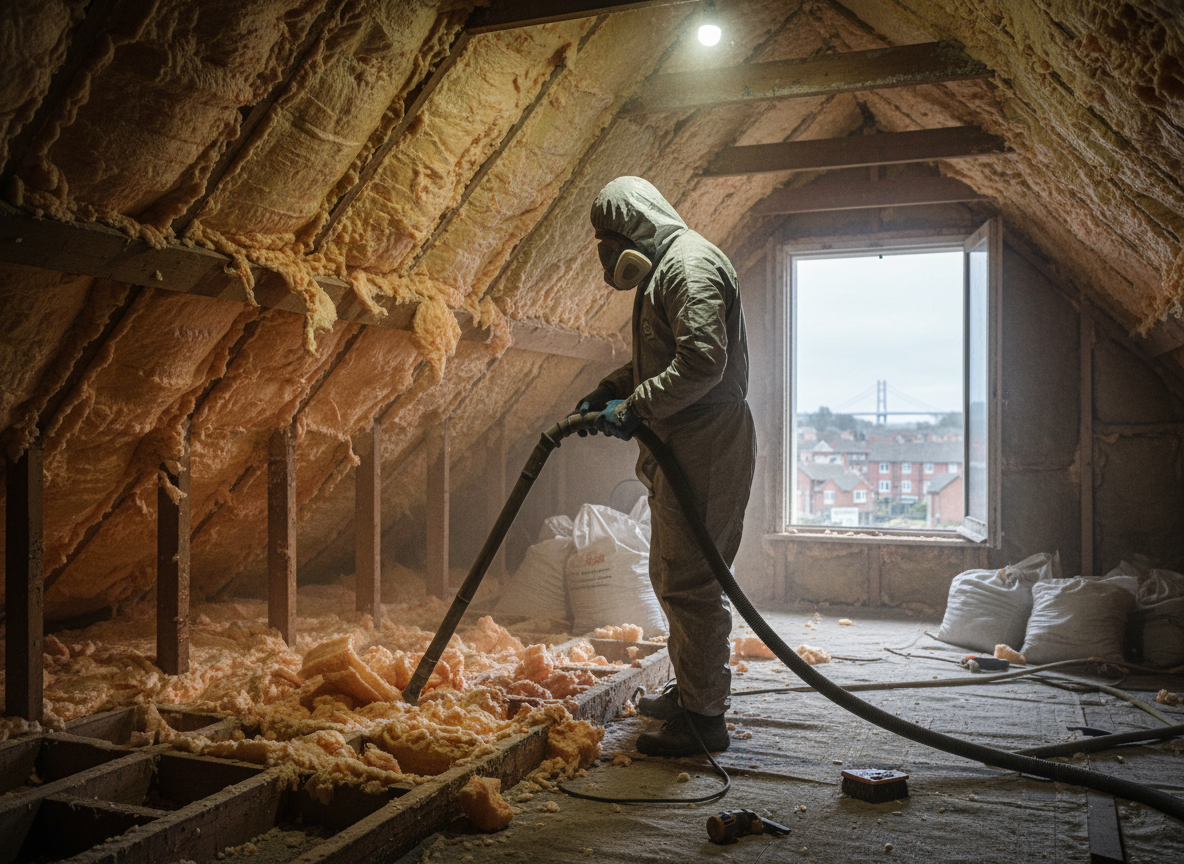
Hull's older terraced housing stock, especially pre-1930s brick builds common around Boothferry Road and nearby streets, often received closed-cell spray foam in attics during earlier energy upgrades. Over time this traps moisture against rafters and can accelerate timber decay in the region's damp winters. Removal requires full containment to prevent foam particles drifting into living spaces below, plus careful cutting around electrical runs and pipework that older properties frequently have routed through the loft. Homeowners in these homes frequently discover the foam only after noticing musty smells or higher heating bills from compromised ventilation.
The removal sequence starts with negative-air setup to protect the rest of the property, followed by mechanical scoring and peeling of the foam layers. In Hull attics, crews routinely encounter foam bonded directly to original lath and plaster ceilings, which demands slower hand work to avoid cracking the ceiling from above. Waste must be bagged on site and taken to licensed disposal facilities; open-cell foam in particular breaks down into fine dust that clings to joists. Weather plays a direct role—jobs scheduled after heavy rain see slower drying of any exposed timbers before new insulation can be considered.
Edge cases include attics with residual asbestos-containing insulation board around chimneys, common in mid-century Hull extensions, and low headroom lofts where full PPE and dust extraction become essential. Local building control may require notification if structural timber is exposed during removal. NexaClean Crew works from its base at 317 Boothferry Road and maintains 24/7 availability so homeowners can address urgent moisture issues without waiting for standard office hours.
Technician insight
In Hull, the thing that catches most people out with Attic spray foam removal is how tightly closed-cell foam bonds to the original rafters in pre-war terraces near the river; once you start peeling it, hidden damp patches appear that homeowners never saw from below, and you have to stop and dry the timber before finishing.
Terrace attic near Boothferry Road
Homeowner noticed persistent loft damp and rising energy use. Inspection found thick closed-cell foam trapping condensation against original rafters. Crew set up containment, peeled the foam in sections while protecting cabling, then removed all residue and bagged the waste. Attic left ventilated and dry with no further moisture issues reported.
How it works
- 1
Initial Loft Inspection
Assess foam type, depth, attachment points, and any signs of damp or electrical interference in the attic.
- 2
Containment and Preparation
Install negative air machines and floor protection to keep dust and debris out of the rest of the Hull property.
- 3
Foam Extraction
Score and peel foam in sections, working around joists, cables and pipework typical of Yorkshire terraces.
- 4
Site Cleanup and Waste Removal
Vacuum all surfaces, bag waste for licensed disposal, and leave the attic clear for follow-on ventilation work.
Pricing
Pricing depends on attic size, foam thickness, and access constraints common in Hull's older homes.