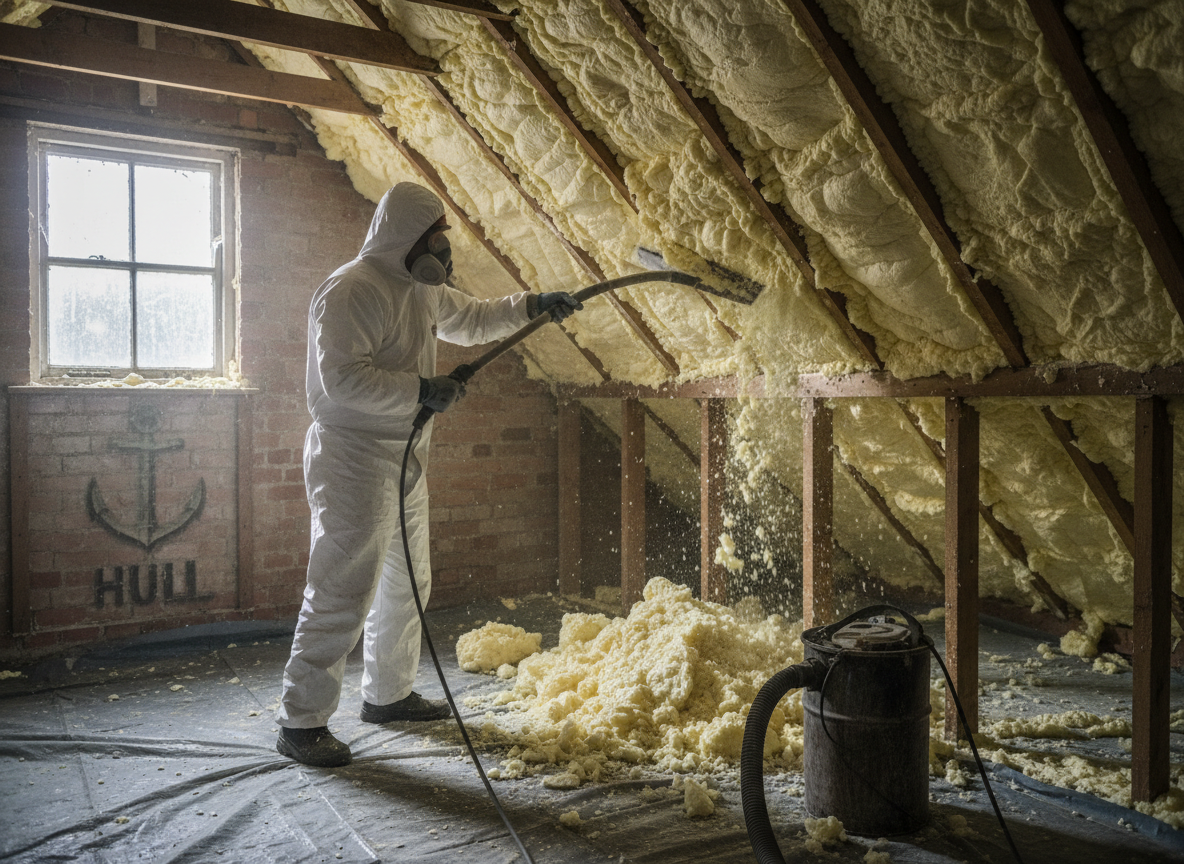
NexaClean Crew reaches Grimsby properties from our base on Boothferry Road in Hull. We work on the tight Victorian terraces along Heneage Road and the post-war semis around Weelsby Road where spray foam was often blown into lofts decades ago. Narrow ginnels and shared chimneys mean crews must cut and bag material in sections rather than drag full sheets through front rooms.
Grimsby’s position on the Humber estuary brings steady salt air and higher indoor humidity that can leave old foam saturated. Homeowners on streets like Lord Street and near Alexandra Dock often see staining on ceilings once the foam starts breaking down. Our teams use moisture meters before starting so we know exactly how far the damp has travelled into joists.
Access to rear yards in central Grimsby is frequently blocked by back-to-back walls and parked vehicles on narrow lanes. We stage equipment on the street and carry sections through the house in sealed bags to keep dust off carpets and kitchens. Evening and weekend slots are common because many residents work shifts at the docks or nearby factories.
Around Grimsby
We regularly work near:
- 📍Grimsby Minster
- 📍Dock Tower
- 📍Freeman Street Market
- 📍Weelsby Woods
- 📍Alexandra Dock
NexaClean Crew in Grimsby — Local Notes
- •Grimsby terraces built before 1910 often have solid brick walls and shared chimney breasts that trap moisture once spray foam is removed, requiring extra ventilation checks.
- •Properties near Freeman Street and the old docks sit on reclaimed land with higher water tables, so crews watch for rising damp that can reappear after foam is gone.
- •Winter winds off the Humber make loft work colder and slower; tarpaulins and portable heaters are standard on jobs around Weelsby Woods and Park Street.
- •Many Grimsby semis have small rear extensions added in the 1970s that reduce headroom, forcing us to dismantle foam in smaller pieces to avoid damaging new ceilings.